


Living by the Ocean: Why Your Aluminium Windows and Doors Need More Than Just a Good Powder Coat
6th November 2026
There is something special about living by the coast. Ocean views, fresh sea air and natural light are among the reasons coastal properties are so desirable. However, the coastal environment can be particularly demanding on windows and doors, making product selection an important consideration for homeowners. Steel will rust within five years if not maintained daily. Timber, like steel, requires very regular maintenance and repainting every three to five years. UPVC while rust proof cannot span large openings and hardware choices become critical in coastal areas. Treated aluminium will not rust or require repainting and can span extremely large openings. Paired with the correct hardware aluminium is the single most durable choice for coastal windows and doors.
Salt spray, humidity, strong winds, UV exposure and wind-driven rain can all contribute to premature deterioration if windows and doors are not properly specified for their environment.
The importance of the right aluminium finish
One of the biggest considerations for coastal homes is the quality of the powder coating applied to aluminium frames. While aluminium is naturally corrosion resistant, its protective finish plays an important role in preventing deterioration.
Not all powder coatings are equal. Homeowners should ask whether the coating has been specifically selected for coastal conditions and whether it meets the relevant Australian architectural coating standards. Higher-performance coating systems, combined with appropriate surface preparation and pretreatment, can provide enhanced protection against corrosion and weathering.
Don't overlook the hardware
The handles, hinges, rollers, locks and screws used in windows and doors are often more vulnerable to coastal conditions than the aluminium frames themselves.
Salt and moisture can accelerate corrosion, causing hardware to deteriorate, become difficult to operate or eventually fail. Homeowners should ask manufacturers about the materials used in their hardware. Marine-grade 316 stainless steel, where appropriate, offers better resistance to chloride corrosion than standard 304 stainless steel. Correctly treated aluminium hardware can offer a longer warranty than stainless steel and should be a consideration.
A well-designed window or door should consider the durability of every component, not just the visible aluminium frame.
Drainage and weather performance matter
Coastal properties are frequently exposed to strong winds and driving rain. Quality aluminium windows and doors should be designed to manage water effectively, with properly engineered drainage channels, weep holes, seals and sill systems.
This is particularly important for large sliding and bifold doors, where minimal thresholds and expansive openings can create additional engineering challenges.
Homeowners should ask whether the products have been independently tested for air infiltration, water penetration and structural performance under the relevant Australian standards. A product that looks impressive is not necessarily one that will perform well during a severe coastal storm.
Maintenance is still important
Even premium aluminium windows and doors require some basic maintenance in coastal environments. Regularly washing external frames with fresh water and mild detergent helps remove accumulated salt deposits. Tracks should be kept clear of sand and debris, while hinges, rollers, locks and seals should be periodically inspected.
The frequency of maintenance will depend on how exposed the property is to ocean conditions, with beachfront homes generally requiring more frequent attention.
Think beyond appearance when choosing your windows and doors
For coastal homeowners, selecting aluminium windows and doors should involve more than comparing designs, prices and frame colours. The quality of the coating, hardware, seals, drainage and overall system engineering will have a significant influence on long-term performance.
At Fineline Systems, we believe great architectural windows and doors should combine elegant design with dependable engineering. For coastal homes, that means looking beyond aesthetics and considering how every component will perform in the environment it is designed for.
After all, your windows and doors should allow you to enjoy the coastal lifestyle, not become an ongoing maintenance concern.
Dumped and Undercut: What the Trade Findings Mean for Windows and Doors
15th October 2026
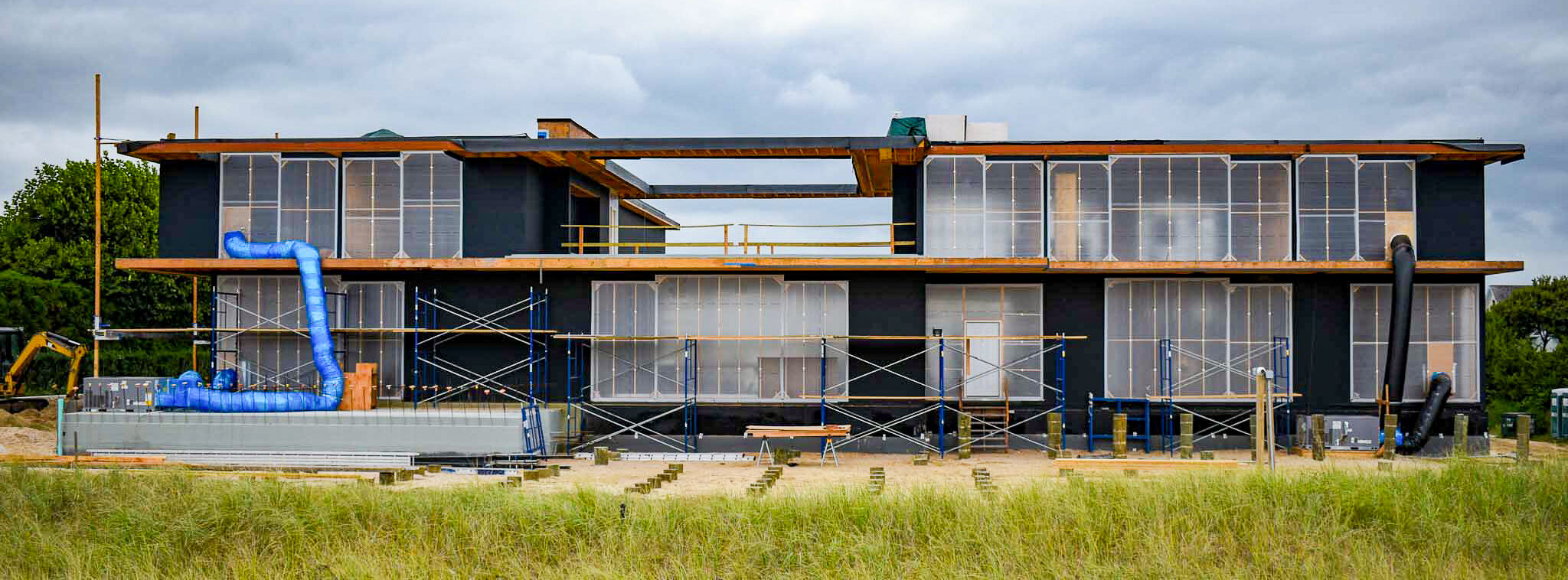
On 15 October 2026, the Australian Trade Remedies Commission released preliminary findings that go to the heart of the imported window and door debate: aluminium windows and doors from China were “dumped” in Australia, sold at prices well below their normal value.
What the commission found
All Chinese exporters except one were found to have dumped goods during the 2024–25 investigation period, with dumping margins ranging from 5.3 to 70.4 per cent. Some exporters also received modest government subsidies. The commission concluded the imports caused material injury to local manufacturers.
The numbers show why. In a local market worth about $2.8 billion, Chinese imports held roughly 19 per cent of sales. Local manufacturers’ sales volumes fell about 19 per cent between mid-2021 and mid-2025. Half of the tenders and quotes examined came in around 30 per cent below expected prices, and more than a quarter were undercut by 40 per cent or more. The commission estimated local industry lost about $350 million.
Tariffs, or not yet?
Chinese-made aluminium windows and doors currently face no tariffs under the China–Australia Free Trade Agreement. What changed on 15 October is that importers must now lodge financial securities, set between 5.3 and 73.3 per cent of product value depending on the exporter, as a guarantee against duties that may be imposed later.
The commission is due to make its final recommendation to the industry minister by 16 December, with a ministerial decision expected within 30 days of receiving it. A UNSW trade law expert has said duties are likely, because the preliminary findings are hard to change.
The other side of the ledger
Not everyone welcomes the move. Master Builders Australia has warned that any measure raising construction costs lands while housing affordability is under pressure, and says Australia shouldn’t restrict compliant, high-quality building products. Economists note that securities can flow through to higher prices. Some importers have also argued the investigation’s scope is too broad.
Price versus performance
It is important to be precise here. The commission said it did not consider product testing or compliance allegations in its preliminary findings. Dumping is a question of pricing. Safety is a separate question, and the independent testing in which seven of eight imported products failed the minimum Australian standard remains a reason for buyers to ask harder questions, however the trade case ends.
What buyers should do now
- Expect price movement on imported products and ask suppliers how securities and possible duties are being handled.
- Treat very low quotes with caution. Gaps of this size are exactly what the commission described.
- Verify compliance: check the WERS listing and ask for AS 2047 test reports from NATA-accredited laboratories.
- Count warranty and remake risk, not just upfront cost.
At Fineline Systems, we fabricate premium architectural aluminium products in Australia, test all products in Australia and we believe that is a standard worth protecting.
As the AGWA (Australian Glass and Window Association) puts it, the aim is not to shield local business from competition but to protect competition from unfair trading. For builders and homeowners, the smart response is the same either way: buy on evidence, not just price.
Sources: ABC News (15 October 2026); Australian Trade Remedies Commission, Investigation 691.
The Hidden Cost of Cheap Imported Windows and Doors
2th October 2026
When China’s property slump left manufacturers with surplus stock, a wave of aluminium windows and doors headed for Australia, often priced at roughly half the cost of locally made products. For builders and homeowners watching budgets, the appeal is obvious. The problem is what the price doesn’t show.
What the testing found
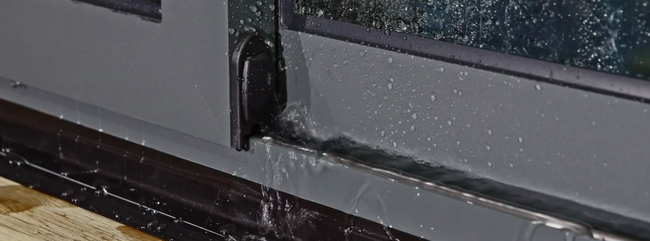
Independent testing at a NATA-accredited facility has raised serious concerns. Of eight imported aluminium window and door products sourced through a builder, seven failed to meet the minimum Australian standard for residential use. The failures weren’t cosmetic: water penetrated windows, sliding door panels moved excessively, and stacker door panels were dislodged from their frames. News coverage also highlighted the danger of heavy door panels, some weighing 108 kilograms, coming loose around children.
Compliance on paper, not in practice
Perhaps most worrying, one supplier’s marketing claimed compliance with Australian Standards, yet the testing did not support it. Windows and external glazed doors must meet AS 2047, which governs performance such as water resistance and structural strength. A certificate in a brochure is not proof that the product installed on your building will meet it.
Why it matters
Water ingress leads to mould, damaged framing and costly repairs. Structural failures under wind load or everyday use are a genuine safety risk. When a product turns out to be non-compliant, builders, developers and owners can face insurance and liability problems, with little recourse against an overseas supplier. Even when a product works, warranty claims, replacement parts and remakes can mean long delays.
A fair caveat: eight products is a small sample, and some importers argue it doesn’t represent the whole market. That is a reason for more rigorous, transparent testing, not for assuming imports are safe.
How to protect your project
- Check the Window Energy Rating Scheme (WERS). The Australian Glass and Window Association recommends it because it verifies energy performance and compliant AS 2047 testing.
- Ask for NATA-accredited test reports covering the actual system being supplied, not a generic certificate.
- Confirm who is locally accountable for warranty, repairs and remakes.
- Compare like for like. A low price can hide gaps in testing, system type, support and accountability.
The takeaway
The savings on an imported window can disappear quickly once leaks, failures or compliance problems appear. Windows and doors are among the most critical parts of a building envelope, and getting them right the first time protects people, budgets and reputations.
At Fineline Systems, we fabricate premium architectural aluminium products in Australia, test all products in Australia and we believe that is a standard worth protecting.
Sources: 7NEWS (July 2026); Build Australia; Building Connection (July 2026).
Manufacturing Excellence: Why Modern Technology Matters in Architectural Aluminium
3th September 2026
The quality of an architectural aluminium window or door is influenced by many factors — design, engineering, materials, hardware and workmanship. Yet one of the most important, and often overlooked, factors is the technology used to manufacture the finished product.
In 2026, the difference between manufacturers investing in the latest CNC machinery and those continuing to rely on older equipment is becoming increasingly significant. Modern manufacturing technology provides greater precision, consistency, efficiency and automation, allowing sophisticated aluminium window and door systems to be produced to exceptionally high standards.
At Fineline Systems, continued investment in modern manufacturing technology is an important part of our commitment to producing superior architectural aluminium windows and doors.
Precision and Consistency
Today’s architectural glazing systems are increasingly sophisticated. Slim sightlines, complex drainage details, multi-point locking systems, concealed hardware and thermally broken aluminium systems all demand an extremely high level of manufacturing accuracy.
The latest CNC machinery allows critical operations — including cutting, drilling, routing and machining — to be completed with exceptional precision and repeatability.
Unlike older machinery, where accuracy can depend heavily on manual measuring, positioning and operator input, modern CNC equipment can automate complex machining processes. Once correctly programmed, each component can be manufactured consistently to the required specification.
This precision is particularly important for premium aluminium windows and doors, where even small inconsistencies can affect alignment, operation, weather performance and the overall appearance of the finished product.
Better Technology Produces Better Products
Investing in modern machinery is not simply about manufacturing faster. It is about manufacturing better. Current-generation CNC technology enables Fineline Systems to efficiently process complex aluminium profiles while maintaining the accuracy required for high-end architectural applications.
The result is greater production consistency, improved component fit, reduced manufacturing variation and enhanced quality control.
For refined, slimline architectural products, these benefits are particularly important. Customers investing in premium windows and doors expect precise panel alignment, smooth operation and exceptional attention to detail. Modern manufacturing technology helps us deliver these outcomes consistently.
Why Powder Coating Preparation Matters
A high-quality powder-coated finish involves far more than selecting a colour and applying powder. The long-term performance of the coating begins before the paint is applied — with the preparation of the metal surface.
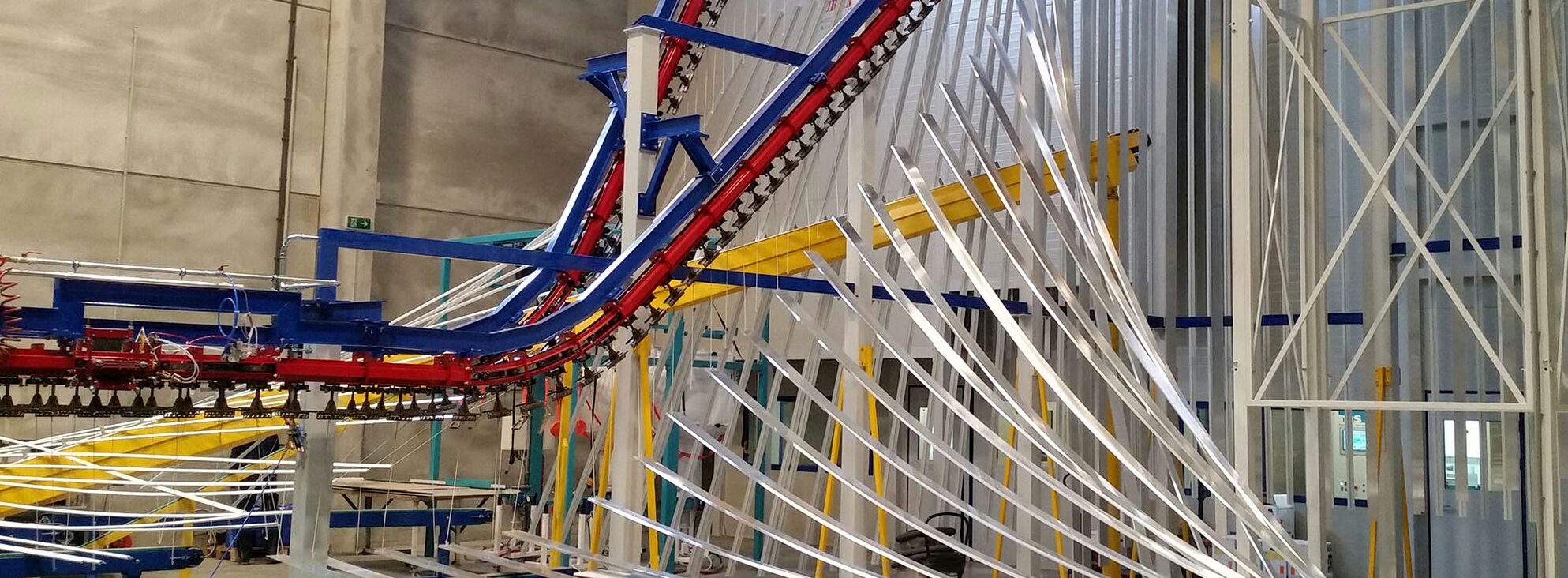
Modern powder-coating processes use advanced, multi-stage pre-treatment systems to thoroughly clean, etch and chemically prepare aluminium and steel. These processes remove oils, dirt, oxidation and other contaminants that can prevent the coating from properly bonding to the metal.
A modern conversion coating is then applied (double chromate conversion pretreatment) to create an ideal surface for powder adhesion while providing an additional layer of corrosion protection.
This preparation is particularly important with aluminium, where the naturally occurring oxide layer can affect coating adhesion if it is not correctly treated. Modern chrome-free pre-treatment systems can provide excellent adhesion and corrosion resistance while also meeting contemporary environmental requirements.
The result is a stronger, more durable and longer-lasting finish, with improved resistance to peeling, blistering, corrosion and environmental exposure.
Put simply, the powder coating you see is only as good as the preparation underneath it. Investing in modern pre-treatment technology is an investment in the long-term appearance, quality and performance of the finished product.
Efficiency, Less Waste and Better Value for our Customers
Modern technology also creates important operational efficiencies. Advanced machinery can combine multiple manufacturing processes, reduce manual handling and minimise setup and machining times. Greater precision also means fewer errors, less rework and reduced material waste.
For Fineline Systems, these efficiencies improve productivity and help control operational costs. Where savings can be achieved, we believe the benefits should ultimately flow through to our customers through improved value, competitive pricing and consistently superior products.
Investing in the Future
Technology does not stand still — and neither does Fineline Systems.
As aluminium systems become more advanced and manufacturing technology continues to evolve, we remain committed to reviewing and investing in equipment that improves our capability, quality and efficiency.
Our objective is simple: to combine innovative architectural design with modern manufacturing technology and skilled craftsmanship.
By investing in the technology of today rather than relying on the machinery of yesterday, Fineline Systems is positioning itself to manufacture better products, more efficiently, with greater precision and consistency.
For our customers, that means beautifully engineered, high-performance aluminium windows and doors — manufactured to the standards that modern architecture demands.

Pittella Architectural Hardware Now Standard Across Fineline Systems Aluminium Doors & Windows
6th August 2026
Pittella Architectural Hardware Australia | Fineline Systems
Fineline Systems is pleased to announce the addition of Pittella to our carefully curated range of premium architectural hardware. This exciting partnership further reinforces our commitment to delivering high-performance aluminium doors and windows complemented by exceptional architectural hardware for residential and commercial projects.
Effective immediately, Pittella hardware will become the standard hardware offering across the Fineline Systems product range, providing customers with an elegant combination of superior engineering, refined aesthetics and outstanding craftsmanship. The pairing of Fineline Systems' premium aluminium door and window systems with Pittella's world-class hardware creates a truly market-leading architectural solution.
Renowned for its European-inspired design philosophy, Pittella has established itself as one of Australia's leading suppliers of luxury architectural hardware. Its extensive collection includes architectural door handles, entrance pull handles, cabinet hardware, bathroom accessories and premium tapware, all meticulously designed to combine functionality with timeless style.
Every Pittella product reflects the company's longstanding commitment to craftsmanship, authenticity and uncompromising quality. Beautiful finishes, precision manufacturing and thoughtful design ensure each piece enhances both contemporary and traditional architectural spaces.
Pittella has earned the trust of architects, interior designers, builders and discerning homeowners by consistently delivering products that celebrate detail and design excellence. Through close collaboration with Australia's leading design professionals, Pittella has established itself not merely as a hardware supplier, but as a valued architectural design partner.
The inclusion of Pittella further strengthens Fineline Systems' premium hardware offering alongside internationally recognised brands including Buster + Punch, Joseph Giles and Iver. Together, these brands provide an extensive selection of architectural hardware, ranging from industrial-inspired statement pieces through to understated contemporary designs and timeless classic collections. This diverse portfolio enables us to specify hardware solutions that perfectly complement each project's unique architectural vision.
While Pittella is now our standard hardware offering, Fineline Systems remains committed to design flexibility. We are pleased to accommodate client-nominated hardware where compatible with our systems, ensuring architects, designers and homeowners retain complete creative freedom.
At Fineline Systems, we believe exceptional aluminium doors and windows deserve equally exceptional hardware. By combining premium architectural systems with carefully selected luxury hardware, we deliver complete design solutions without compromise.
To learn more about our range of premium aluminium doors, windows and architectural hardware, visit http://www.finelinesystems.com.au or contact our Sydney showroom to speak with one of our specialists.

10 Questions Every Australian Homeowner Should Ask Before Purchasing Windows and Doors
15th July 2026
Window & Door Buyer's Checklist
Choosing the right windows and doors is about far more than appearance. Use this checklist to ensure you're investing in products that deliver comfort, performance and long-term value.
✓ 1. Are the windows and doors energy efficient?
□ Is double glazing included as standard?
□ Is Low-E glass available?
□ Are thermally broken frames available?
□ Will the products help reduce heating and cooling costs?
□ Do they meet current NCC energy efficiency requirements?
✓ 2. Will they reduce outside noise?
□ Do the windows provide effective acoustic insulation?
□ Are they suitable for homes near busy roads, airports or schools?
□ Will they create a quieter home or home office?
✓ 3. Do they comply with Australian building standards?
□ Are the products tested to Australian Standards?
□ Do they meet NCC performance requirements?
□ Can the supplier provide test certificates and performance data, including U-Values and SHGC?
✓ 4. Will they minimise condensation?
□ Does the glazing reduce condensation?
□ Will it help prevent mould and moisture damage?
□ Does it improve indoor comfort and air quality?
✓ 5. Are they secure?
□ Is laminated or toughened safety glass available?
□ Do they include multi-point locking systems?
□ Are security screen options available if required?
✓ 6. Are they suitable for my location?
□ Are bushfire-rated (BAL) options available if required?
□ Have the products been tested for high wind and water resistance?
□ Are they suitable for coastal environments?
✓ 7. Are they built to withstand Australia's climate?
□ Have they been independently weather tested?
□ Are the finishes designed for long-term durability?
□ Will they resist corrosion and harsh weather conditions?
✓ 8. Are they environmentally responsible?
□ Are the frames manufactured from recyclable aluminium?
□ Will they reduce my home's energy consumption?
□ Are they designed for a long service life?
✓ 9. Do they suit the style of my home?
□ Are slimline frame options available?
□ Can I choose large-format glazing?
□ Are sliding, bi-fold and other configurations available?
□ Do they maximise natural light and indoor-outdoor living?
✓ 10. What happens after installation?
□ Are the windows manufactured in Australia?
□ Is a comprehensive local warranty provided?
□ Are spare parts readily available?
□ Can I access local technical support if required?
Final Tip
The cheapest quote isn't always the best value. Consider energy efficiency, durability, compliance, warranty, local support and long-term running costs before making your decision. High-quality windows and doors should provide decades of comfort, security and performance—not just a lower upfront price.
Download PDF version here

Are Cheap Imported Windows Really Cheaper?
11th June 2026
When comparing window quotes, imported products can appear to offer significant savings. However, the lowest purchase price doesn't always represent the lowest overall cost. Quality, performance and longevity should all be considered before making a decision.
One of the biggest differences is product performance. Lower-cost imported windows may not be designed specifically for Australia's climate or building requirements. Poor thermal performance can result in higher heating and cooling costs throughout the life of the home, while inferior weather seals may allow air and water infiltration.
Durability is another important consideration. Aluminium profile quality, hardware, surface finishes and manufacturing tolerances all influence how well a window performs over time. Windows that are difficult to operate, suffer premature corrosion or require frequent repairs can quickly outweigh any initial savings.
Warranty support is equally important. If replacement parts or technical assistance are needed years after installation, locally manufactured products often provide faster service, readily available components and ongoing customer support. Delays in obtaining parts for imported systems can lead to inconvenience and additional expense.
Australian homeowners should also consider compliance. Windows must satisfy strict Australian Standards for structural performance, water penetration, air infiltration and safety glazing. Choosing products that have been independently tested provides confidence that they are suitable for local conditions.
Beyond performance, buying Australian-made products supports local manufacturing, skilled employment and shorter supply chains. Local production also offers greater flexibility for custom sizes, faster lead times and easier communication throughout a project.
At Fineline Systems, every aluminium window and door is manufactured in Sydney using architecturally designed aluminium profiles, premium hardware and double glazing as standard. Our products are engineered to exceed Australian standards and to accommodate all Australian conditions, combining outstanding thermal performance, durability and architectural design with the reassurance of local manufacturing and after-sales support.
The true cost of a window extends well beyond the purchase price. Investing in a high-quality, well-engineered system can deliver lower energy bills, greater comfort and customer service, fewer maintenance issues and lasting value for decades to come.
For more information on the Australian industry, AGWA is a very informative place to start. AGWA is dedicated to maintaining industry compliance and accreditation, giving confidence in the skills, experience, and processes of AGWA members, ensuring a superior customer experience with quality products and services.

Why Double Glazing is Essential for Modern Australian Homes
8th May 2026
As Australians look for ways to improve energy efficiency, reduce household running costs and create more comfortable living spaces, double glazing has become one of the most valuable upgrades for modern homes. While it has been standard in Europe for decades, many Australian homes are only now recognising its significant benefits.
Double glazing uses two panes of glass separated by an insulating air or argon-filled cavity. This simple yet highly effective design slows the transfer of heat, helping homes stay cooler during Australia's hot summers and warmer throughout winter. By reducing the workload on heating and cooling systems, double-glazed windows and doors can lower energy consumption and contribute to reduced electricity bills.
Another major advantage is acoustic performance. Double glazing significantly reduces outside noise, making it ideal for homes near busy roads, airports, schools or urban centres. A quieter home creates a more relaxing and enjoyable living environment.
Condensation control is another often-overlooked benefit. Double glazing helps maintain a warmer internal glass surface, reducing moisture build-up that can contribute to mould growth, damage timber finishes and affect indoor air quality.
Security is also enhanced. Double-glazed units are inherently stronger than single glazing and, when combined with toughened or laminated safety glass, provide an additional level of protection against accidental breakage and forced entry.
At Fineline Systems, our premium aluminium windows and doors are designed to maximise the benefits of double glazing, which is a standard on all of our products. Manufactured in Sydney using precision-engineered aluminium profiles and premium European hardware, our products combine exceptional thermal performance with the slim architectural sightlines sought by today's architects, builders and homeowners.
For even greater performance, we recommend combining double glazing with Low-E glass, thermally broken aluminium frames and high-quality weather seals. Together, these features create a window and door system that delivers outstanding energy efficiency, comfort and durability.
Whether you're building a new home or renovating an existing one, investing in quality double-glazed aluminium windows and doors is an investment in year-round comfort, lower energy costs and long-term property value. As Australian building standards continue to evolve, choosing high-performance glazing today ensures your home is better prepared for the future.

Fineline Systems Strengthens Architectural Hardware Range with Leading International Partnerships
10th April 2026
Architectural Door Hardware Australia | Fineline Systems
Fineline Systems is proud to announce the expansion of our premium door and window hardware range with the addition of two globally recognised suppliers: Buster + Punch and Joseph Giles.
This carefully selected addition strengthens our commitment to providing not only high-performance aluminium door and window systems, but also refined, design-led hardware that complements modern architectural and interior spaces.
Buster + Punch introduces a bold, industrial-inspired aesthetic. Crafted from solid metals with signature diamond-cut knurled detailing, these British-designed levers deliver strong visual impact and exceptional tactile quality. Engineered for durability, they are ideal for contemporary urban environments and high-use applications where character and robustness are essential.
Joseph Giles represents the pinnacle of understated British luxury. Hand-finished from solid brass, the collection features elegant proportions, precision engineering, and an extensive selection of premium finishes. Including lever handles, door knobs, decorative hinges and sliding-door fittings, Joseph Giles hardware is perfectly suited to deluxe residential and architectural projects that demand refined detailing and timeless sophistication.
Completing the range is our trusted partner Iver, which offers versatile architectural door levers combining contemporary styling with everyday practicality and reliability. Forged from high-quality solid brass and available in a wide array of finishes, Iver provides excellent value for both residential and commercial installations.
Together, Buster + Punch, Joseph Giles and Iver create a comprehensive hardware portfolio spanning industrial chic, classic luxury and modern Australian design. This allows us to cater to diverse project requirements, from bold statement pieces to discreet, elegant solutions.
We remain flexible; Fineline Systems can also incorporate client-specified hardware, provided it is compatible with our systems. This ensures architects, designers and homeowners retain full creative control.
At Fineline Systems, we believe exceptional doors and windows deserve equally exceptional hardware. Fineline Systems supplies premium hardware for premium aluminium windows and doors. Explore luxury architectural door hardware in Australia. Fineline Systems supplies premium hardware for exclusive aluminium windows and doors. Visit www.finelinesystems.com.au or contact our Sydney showroom to explore the new range.

Fineline Systems Completes Successful Weather Testing on New Aluminium Thermally Broken Slimline Swing & Bi-Fold Door
6th March 2026
Fineline Systems is proud to announce the successful completion of independent weather performance testing on its newest product, an aluminium slimline swing & bifold door. The system passed Australia standards, comfortably achieving excellent compliance across all categories, reinforcing the company’s commitment to engineering excellence and premium performance.
Tested at Azuma under rigorous laboratory conditions, the new slimline aluminium door excelled in air infiltration, water penetration resistance and structural performance under wind load. Note – Water resistance was achieved to 900 Pa, a first for a thermally broken swing door on the Australian Market. The results confirm the system’s suitability for demanding Australian conditions while maintaining the refined aesthetic Fineline Systems is known for.
Designed to combine expansive openings with strength and durability, the configuration delivers uninterrupted indoor-outdoor flow without compromising performance. The slimline aluminium profiles maximise glass area and natural light, while precision engineering ensures smooth operation and long-term reliability. Fineline Systems is proud to offer this thermally broken slimline profile in door leaf heights up to three meters.
This milestone further strengthens Fineline Systems’ position as a leader in high-performance architectural door systems. By exceeding standard performance benchmarks, the company continues to provide products that are both visually elegant and technically robust.
The successful completion of weather testing provides architects, builders and homeowners with added confidence that the new slimline bifold door not only meets but surpasses Australian compliance requirements.
Fineline Systems remains committed to innovation, quality and future focused design, delivering products that perform as beautifully as they look.
For more information about the new Aluminium Slimline Bifold Door, contact Fineline Systems or visit www.finelinesystems.com.au

The Regulatory Gap Between UK and Australian Window and Door Standards
10th February 2026
Energy efficiency standards for windows and doors vary significantly between the United Kingdom and Australia, and this disparity has meaningful implications for building performance, energy consumption and long-term sustainability. While both countries regulate fenestration products, the UK has implemented far more stringent window and door energy efficiency regulations, particularly in response to climate targets and rising energy costs.
In the UK, window and door performance is governed by Building Regulations Part L, which sets demanding requirements for thermal efficiency, insulation and overall building energy performance. Low U-values, high-performance glazing and advanced framing systems are not optional upgrades but baseline requirements. Certification schemes such as the British Fenestration Rating Council (BFRC) further reinforce compliance, ensuring that energy-efficient windows and doors are standard across residential and commercial construction.
By contrast, Australian window and door regulations remain less rigorous. While the National Construction Code (NCC) and standards such as AS 2047 address structural integrity, water resistance and basic thermal performance, minimum energy efficiency requirements are generally lower than those enforced in the UK. As a result, many windows and doors that meet Australian standards would fall short of current UK energy performance expectations.
This regulatory gap directly affects homeowners and building occupants. Lower-performing windows and doors contribute to increased heat gain in summer and heat loss in winter, placing greater reliance on mechanical heating and cooling systems. With energy prices continuing to rise and sustainability becoming a growing priority, demand for high-performance windows and doors in Australia is accelerating—often ahead of regulatory change.
Leading manufacturers are responding by exceeding local requirements rather than simply meeting them. Fineline Systems is at the forefront of this shift. Drawing on international best practice and advanced engineering, Fineline Systems supplies windows and doors in Australia that incorporate technology far exceeding current Australian regulations and standards. These products are designed with superior thermal performance, advanced glazing systems and precision-engineered profiles that significantly improve energy efficiency.
Crucially, Fineline Systems delivers this enhanced performance as standard. Homeowners, architects and builders gain access to future-proof window and door technology that surpasses Australian compliance requirements, without paying a premium. This approach ensures projects are better positioned for future regulatory tightening while immediately benefiting from improved comfort, reduced energy consumption and long-term value.
As Australia moves toward stronger sustainability and energy efficiency targets, the window and door industry will play an increasingly important role. The UK market demonstrates what is achievable when regulation, innovation and performance expectations align. By adopting technology that already exceeds current standards, companies like Fineline Systems are helping raise the benchmark for energy-efficient windows and doors in Australia, delivering smarter, more resilient buildings today and into the future.
Our Featured Projects
Explore the projects that take advantage of what Fineline has to offer. These spaces showcase the sleek and sophisticated look that can be applied to any home or commercial setting.


Grace House
Sydney CBD, NSW
Office Space - Heritage Restoration
This heritage site in the heart of the city, dating back to 1913, underwent significant restoration, completed in 2024. The team at Grace House chose to implement the Fineline Internal Door in it's office spaces to pay homage the class and history of the architecture, while providing an industrial edge to the space.

Amy's Place
Bayview, NSW
New Build - Pantry Door
When designing this stunning home on Sydney's Northern Beaches, the architects were searching for a door suite that complimented it's contemporary art-deco style. The Fineline steel-look Internal Door was a perfect match, becoming a feature of the kitchen and entertaining area.


